Art of Stone

Old City Jail: Historic Granite Stair Restoration

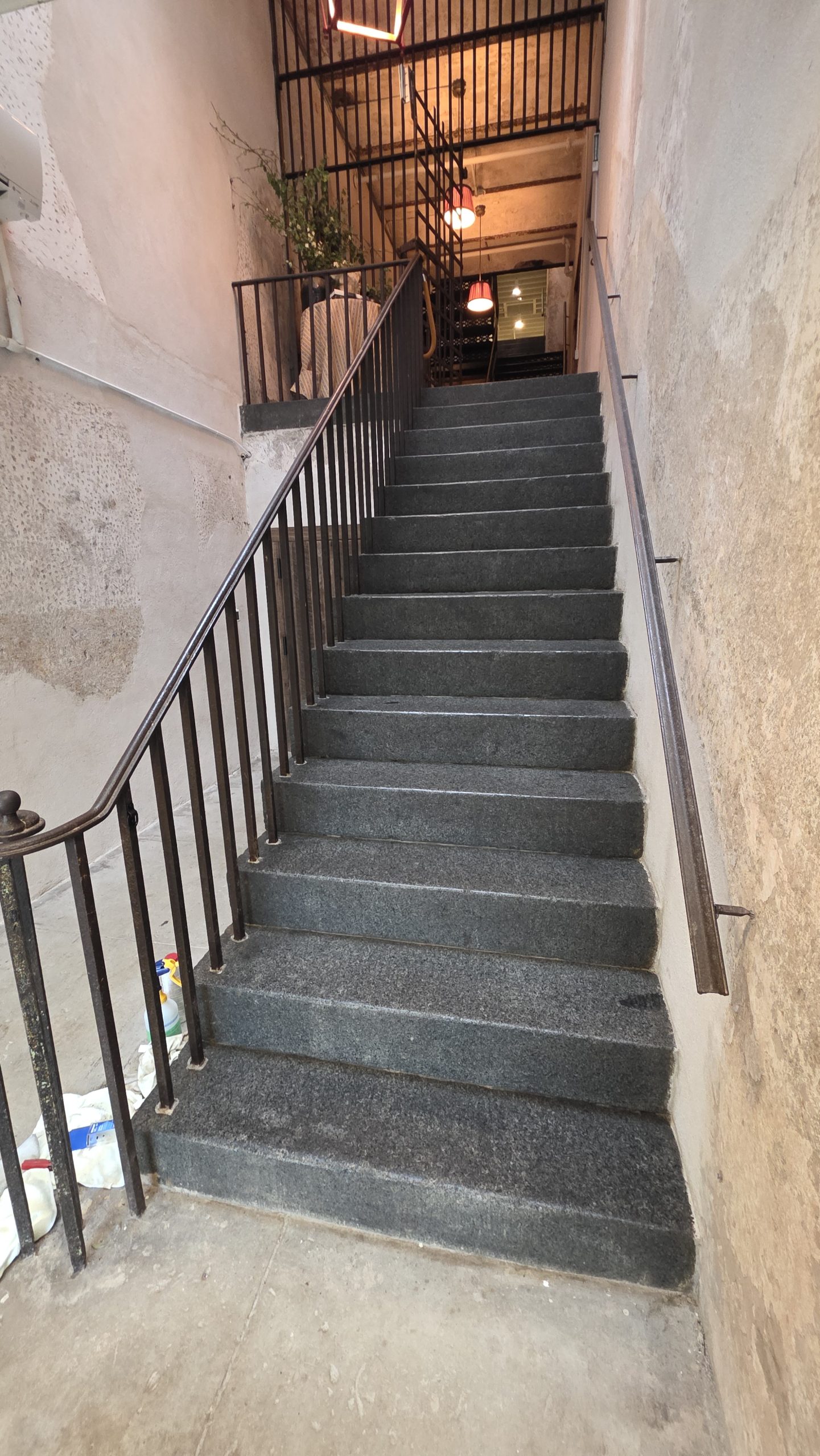
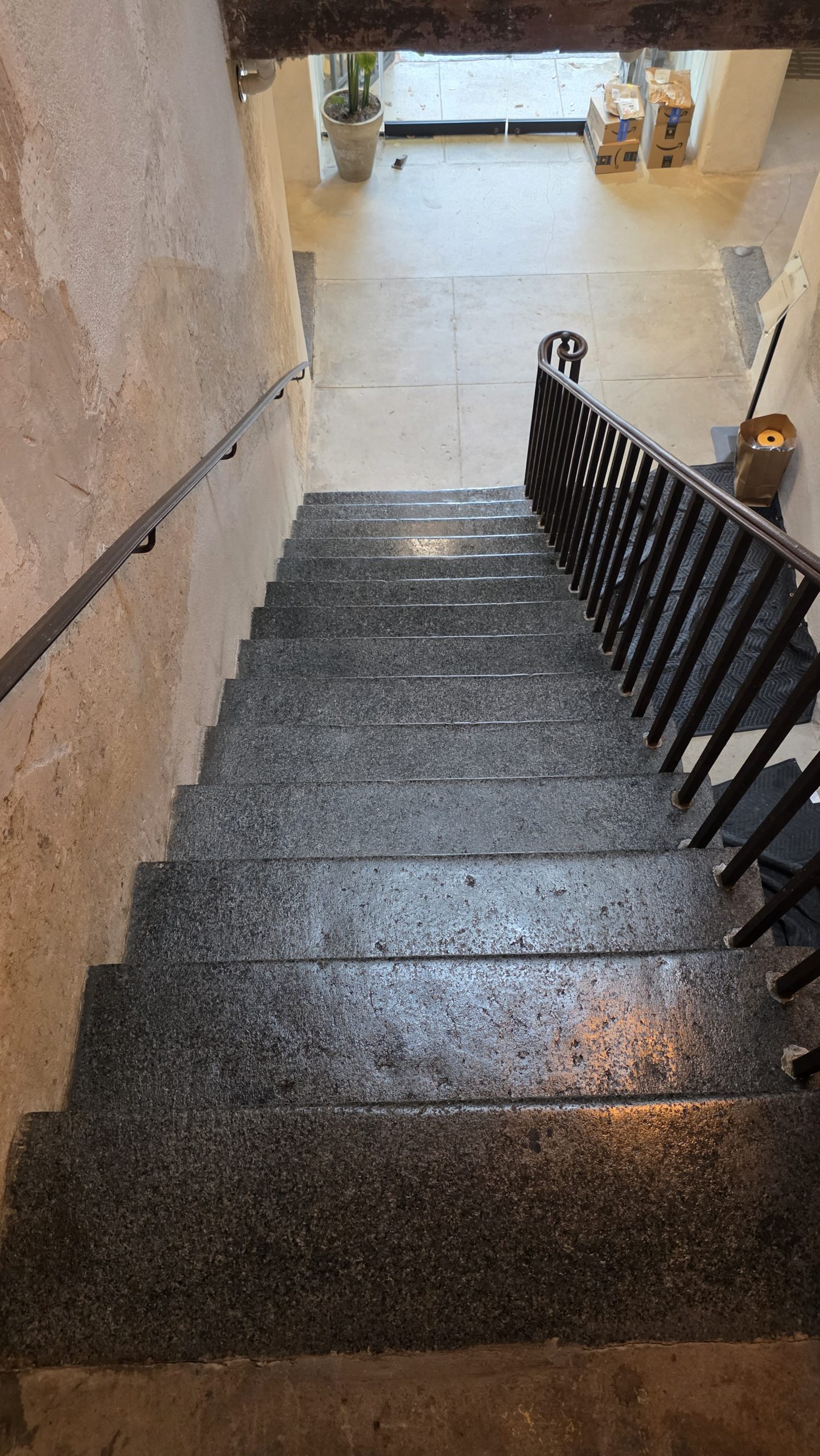
At the Old City Jail in Charleston, South Carolina, we were entrusted with cleaning and protecting a historic granite staircase inside a building dating to 1802. The stairs are part of the character of the historic structure, and our assignment called for preservation rather than making an old surface look newly manufactured.

Landmark Enterprises contacted us after Eugene Marble & Granite referred the work to Ivan Andreev, our technical director. Following an on-site inspection and measurements, we proposed a careful restoration program for approximately 25 solid-granite steps.

On historic stone, the most important decision is sometimes knowing which signs of age should be left untouched.

The Challenge

The staircase showed long-standing wear while retaining an older, naturally rough surface character. Its original texture was naturally rougher than that of a modern polished stair. With years of use, the most frequently walked areas had become smoother, developing a subtle, leather-like sheen while the recesses retained ingrained grime.

Hardened deposits of mortar, cement, and plaster also remained near the walls and along the edges of several treads. Ordinary cleaning could not safely remove these residues from the granite’s irregular surface. We needed to clear the contamination without grinding away the stone’s historic texture.

Our Response

Our restoration was deliberately selective. We combined stone-safe chemical cleaning with localized mechanical work to release embedded dirt and hardened deposits while preserving the original contours of the steps.

After the granite dried, we applied a protective color-enhancing treatment to deepen its natural tone. We also advised against filling certain chips at the tread edges, because that cosmetic intervention offered limited practical value and could compromise the historic appearance.

Location: 21 Magazine Street, Charleston, SC

Property: Old City Jail — historic building

Stone: Natural granite

Scope: Approximately 25 steps

Schedule: 2 working days

On-site team: 2 specialists

The Restoration Process

The two-day treatment balanced effective cleaning with restraint. Every technique was chosen to address accumulated material on the surface, not the age and character of the stone itself.

Day 1

Stone-safe deep cleaning

We treated the granite with specialized acid-free cleaners suitable for natural stone. To address hard mortar and plaster remnants, Ivan worked locally with diamond brushes and a compact rotary tool fitted with diamond attachments. The combination allowed detailed cleaning of recesses and edges without indiscriminately flattening the stone.

Assessment

Preserving chips and worn edges

Some tread edges showed chips and wear. After considering the owner’s questions about repair, Ivan recommended leaving selected areas intact. Small losses were part of the staircase’s original character, and patching exposed tread edges could introduce a material that might later break away under repeated foot traffic.


Day 2

Drying and stone protection

Once the cleaned granite was fully dry, we returned to apply a professional stone-enhancing sealer. This treatment enriched the natural color and brought out the texture while helping reduce moisture and dirt absorption. It was not intended to create a modern, polished finish.

Why we did not rebuild every chipped edge

A chipped edge can often be filled with a repair compound, but the right decision depends on the role of the surface. On a historic stair, minor wear can be part of the building’s material record. Covering every imperfection could alter the way the original granite is perceived.

There was also a practical concern: stair nosings experience repeated impact and abrasion. Even a well-made repair compound behaves differently from solid granite and may eventually chip or detach under direct load. In this case, a cosmetic repair was not justified by a reliable functional benefit.

Conservation over cosmetic perfection

The aim was to remove contamination, make the granite easier to maintain, and honor the historic finish. A successful restoration does not always mean removing every visible trace of age.

The Result

In two working days, our team deep-cleaned and protected approximately 25 granite steps at the Old City Jail. Built-up dirt and accessible hardened construction deposits were removed, and the stone-enhancing sealer gave the granite a richer, more defined appearance.


The staircase retained its natural surface, historical wear, and selected edge chips. The result was a cleaner, better-protected stair that still reads as original stonework — an example of preservation-minded restoration guided by the needs of the material, not simply by the pursuit of a flawless new look.

Select the fields to be shown. Others will be hidden. Drag and drop to rearrange the order.
  • Image
  • SKU
  • Rating
  • Price
  • Stock
  • Availability
  • Add to cart
  • Description
  • Content
  • Weight
  • Dimensions
  • Additional information
Click outside to hide the comparison bar
Compare