

Uneven shine on a marble floor usually means different areas of the surface have worn, etched, or been polished at different rates. High-traffic paths often become duller, while protected areas near walls, under furniture, or along room edges may keep more of their original gloss.
When homeowners ask about marble floor restoration in St. Stephen, SC, we first look at whether the difference is caused by wear, chemical etching, residue, previous polishing, or an older coating. At The Art of Stone, we do not assume that a shiny patch is automatically the “good” area or that a dull patch simply needs more polish. The surface has to be evaluated as a whole.
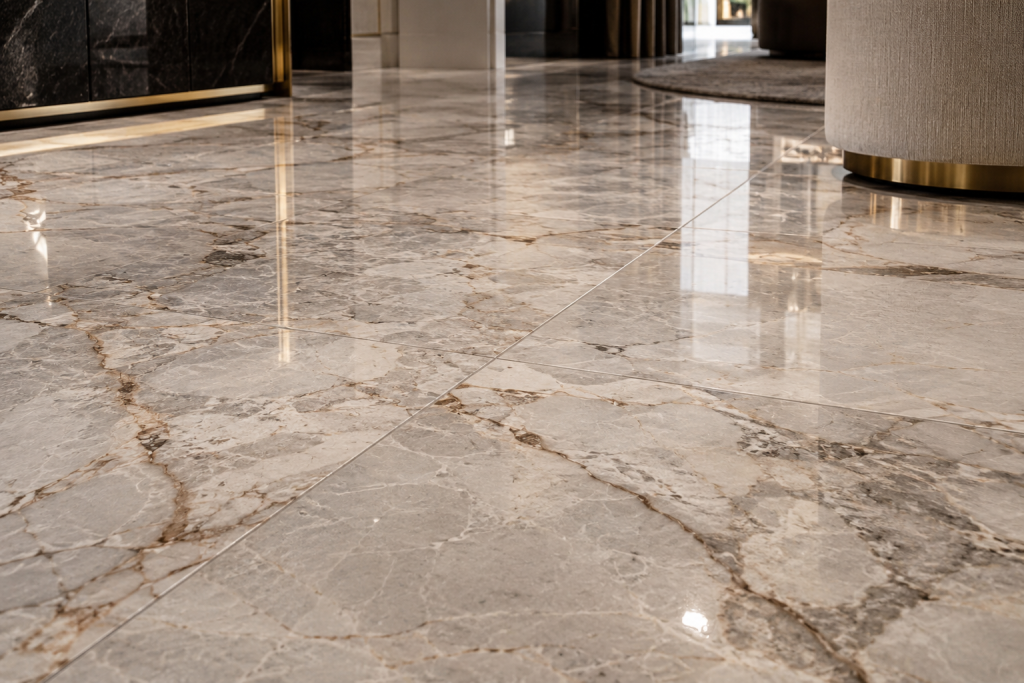
Why Does Marble Develop Uneven Shine?
Marble develops uneven shine because it is a relatively soft, calcite-based natural stone that reacts to traffic, abrasion, and acidic substances. Areas that receive more foot traffic gradually develop microscopic scratches that scatter light, making the surface look duller.
Other areas may stay shinier because they receive less wear. A hallway path, kitchen entry, or area in front of a vanity can look noticeably flatter than the perimeter of the same room even though the stone was originally finished at the same time.
Can Foot Traffic Make One Part of the Floor Duller Than Another?
Yes. Foot traffic is one of the most common reasons marble floors develop uneven sheen.
Fine grit and dust act like a mild abrasive under shoes. Over time, repeated traffic creates tiny scratches in the finish. These scratches may be too small to notice individually, but together they reduce clarity and reflection.
A typical traffic pattern may appear as:
- Duller paths between doors and furniture
- Less shine in hallways and entry areas
- More gloss along walls and corners
- Uneven reflection in front of sinks, islands, or frequently used seating areas
For marble floor restoration in St. Stephen, SC, identifying these traffic patterns helps us determine whether polishing alone is enough or whether the floor needs honing first.
Can Acid Etching Cause Dull Spots That Look Like Wear?
Yes. Acid etching can create isolated dull areas that look similar to worn marble, but the cause is different.
Marble contains calcite, which reacts with acids. Vinegar, citrus, some bathroom cleaners, certain food spills, and acidic cleaning products can chemically alter the surface. The result may appear as a pale, cloudy, or flat-looking spot.
Etching is not the same as staining. A stain changes the color because a substance penetrates the stone, while etching changes the surface itself. Sealer may reduce absorption, but it does not prevent acid etching.
Can Cleaning Products Create Patchy Shine?
Yes. Residue from cleaners, waxes, topical coatings, soaps, or polishing products can create areas that look shinier or cloudier than the surrounding marble.
Sometimes the stone itself is not actually polished unevenly. A film on the surface changes how light reflects and makes the floor appear inconsistent.
This is why we begin with proper cleaning and inspection before aggressive refinishing. Removing residue may reveal that some areas need no mechanical work at all, while other sections still show true wear or etching.
Can Previous Spot Polishing Make a Marble Floor Look Uneven?
Yes. Spot polishing can create halos or shiny patches when only one small area is brought to a different level of gloss than the surrounding floor.
This often happens after someone tries to fix a single dull spot without blending the finish across a larger area. The repaired section may look good from directly above but stand out when viewed from an angle.
For marble floor restoration in St. Stephen, SC, we usually evaluate a broader section of the floor rather than treating every visible spot independently. A consistent finish often requires blending adjacent areas so the reflection transitions naturally.

How Do Honing and Polishing Differ?
Honing and polishing are different stages of surface refinement. Honing uses abrasives to remove or reduce scratches, etching, wear, and surface irregularities. Polishing follows by refining the honed surface to a higher sheen when the stone and desired finish allow it.
| Process | Main Purpose | Best For | What It Does Not Fix Alone |
|---|---|---|---|
| Deep cleaning | Removes residue and surface contamination | Soap film, dirt, product buildup | Deep scratches, etching, uneven wear |
| Honing | Refines and levels the surface finish | Etching, scratches, traffic wear | Does not necessarily produce a high gloss |
| Polishing | Increases sheen and clarity | Properly prepared marble | Deep scratches or uneven surface damage |
| Sealing | Reduces liquid absorption | Porous stone needing protection | Does not create shine or repair etching |
If a floor has only mild loss of gloss and no significant scratches or etching, polishing may be enough. If the surface is unevenly worn or damaged, polishing alone can exaggerate the difference.
When Does a Marble Floor Need Honing Before Polishing?
A floor usually needs honing first when scratches, etching, wear patterns, or previous spot repairs have created an uneven surface. Polishing works best when the underlying surface has already been brought to a consistent condition.
If we polish a deeply worn path without refining it first, the floor may become shinier but still reflect light unevenly. The scratches and texture differences remain underneath the gloss.
At The Art of Stone, we choose the abrasive sequence based on the condition of the stone rather than using the same process for every marble floor.
Can Different Marble Tiles Naturally Reflect Light Differently?
Yes. Natural marble can vary from tile to tile in mineral structure, veining, color, and density. Those differences can influence how the surface reflects light.
However, strong changes in gloss that follow traffic patterns, cleaning zones, or previous repair areas usually indicate surface condition rather than natural variation alone.
Does Lighting Make Uneven Shine Look Worse?
Yes. Lighting can make a floor look dramatically more uneven even when the actual finish difference is moderate.
Sunlight from large windows, recessed lights, and low-angle fixtures can emphasize reflection lines. A floor that looks fairly uniform in diffuse daylight may show obvious dull lanes at night.
For marble floor restoration in St. Stephen, SC, we often inspect the floor from several angles because the reflection pattern helps us see where the finish changes.
Can Sealer Restore the Shine?
No. Penetrating sealer does not restore gloss.
Sealers are designed primarily to reduce liquid absorption in porous stone. They do not polish the surface, remove etching, erase scratches, or correct worn traffic lanes.
A sealer applied to an unevenly polished floor will generally leave the underlying difference in sheen visible. Surface restoration should be completed first, followed by sealing when appropriate for the stone and conditions.

Can Uneven Shine Be Corrected Without Replacing the Floor?
Usually, yes. If the marble tiles are structurally sound, uneven shine can often be corrected through cleaning, honing, polishing, and targeted repair rather than replacement.
Replacement is more likely to be considered when tiles are severely cracked, loose, structurally damaged, or affected by a substrate problem that restoration cannot solve.
At The Art of Stone, our goal is to preserve existing stone where technically appropriate. Marble that looks tired or patchy can often have significant useful life remaining.
What Does Professional Marble Floor Restoration Usually Involve?
Professional restoration starts with diagnosis, not immediate polishing. We determine what created the uneven appearance and how deep the damage extends.
A typical process may include:
- Inspecting the floor under different lighting
- Identifying traffic wear, scratches, etching, residue, or coatings
- Deep cleaning to remove surface contamination
- Performing localized repairs if needed
- Honing when the finish needs to be leveled
- Polishing to the desired sheen
- Cleaning the finished surface
- Applying a penetrating sealer when appropriate
For marble floor restoration in St. Stephen, SC, the exact sequence depends on the condition of the marble and the finish the homeowner wants.
Why Does Technical Experience Matter With Marble Floors?
Marble floors can look similar on the surface while requiring very different restoration methods. A cloudy area may be cleaner residue, etching, micro-scratching, or an old coating, and treating the wrong cause can make the finish less consistent.
Our work at The Art of Stone is informed by Ivan’s technical background in natural stone. He is an author of professional articles and materials, has developed his own technical methods, and has participated as a speaker at professional exhibitions, workshops, and educational events.
His background also includes educational activity at the College of Charleston and the American College of the Building Arts (ACBA), along with membership in professional associations. His achievements and expertise in the natural stone industry have received official recognition in the United States at the federal level under the extraordinary ability standard.
This experience helps us choose whether a floor needs cleaning, honing, polishing, repair, or a combination rather than applying the same process everywhere.
FAQ
Why is the marble under my furniture shinier?
Those areas usually receive less foot traffic and abrasion, so they retain more of the original finish.
Can polishing alone fix uneven marble shine?
Sometimes, but not when deeper scratches, etching, or uneven wear are present. Honing may be needed first.
Why does my marble floor look dull only in walking paths?
Repeated foot traffic and fine grit can create microscopic scratches that reduce reflection in heavily used areas.
Can vinegar cause a dull spot on marble?
Yes. Vinegar is acidic and can etch marble, creating a dull or cloudy area.
Does sealer make marble shiny?
No. Penetrating sealer reduces absorption but does not create or restore polish.
Can spot polishing make the floor look worse?
Yes. A spot can become shinier than the surrounding marble, creating a visible halo or uneven reflection.
Do unevenly shiny marble floors need replacement?
Usually not. If the tiles are structurally sound, professional honing and polishing can often restore a more consistent finish.
Marble Floor Restoration in St. Stephen, SC and the Charleston Area
The Art of Stone provides natural stone floor restoration, honing, polishing, deep cleaning, sealing, and repair services in Charleston, SC, St. Stephen, SC, and surrounding communities. For marble floor restoration in St. Stephen, SC, we evaluate traffic wear, etching, scratches, old coatings, and previous polishing before choosing the restoration sequence. Call 843-609-3536 to discuss the condition of your marble floor and the finish you want to restore.