
Yes. Addressing minor damage to natural stone early can prevent problems from spreading and reduce the need for more extensive restoration or replacement. A small chip, hairline crack, loose tile, or deteriorating grout joint may seem insignificant at first, but moisture, everyday use, and continued movement can make the condition worse over time.
When homeowners consider stone repair in St. Stephen, SC, we encourage them to look beyond the visible damage and understand what caused it. Repairing the surface without addressing the underlying issue may only provide a temporary improvement. At The Art of Stone, we approach stone repair by evaluating the material, identifying the source of damage, and determining whether a localized correction can protect the surrounding surface.

Why Should Small Stone Problems Be Repaired Early?
Small stone problems are generally easier to address before they affect surrounding areas. A minor chip in a countertop edge, for example, may initially involve only a small section of material. However, repeated impacts can enlarge the damaged area, especially around exposed corners and frequently used edges.
The same principle applies to stone floors and tiled surfaces. A slightly loose tile may allow movement every time someone walks over it. That movement can gradually weaken the surrounding grout joints and affect neighboring tiles.
Early attention is particularly important when we notice:
- Small cracks developing near countertop edges or sink cutouts.
- Chips along exposed marble or granite corners.
- Grout that is cracking, crumbling, or separating.
- Stone tiles that sound hollow or move under pressure.
- Small areas of discoloration caused by moisture.
- Surface deterioration around frequently used areas.
Not every minor imperfection indicates an urgent structural problem. However, understanding its cause helps us determine whether monitoring, localized repair, or more extensive restoration is appropriate.
What Types of Stone Damage Can Become More Expensive Over Time?
Several types of relatively minor damage can develop into larger problems if their underlying causes remain untreated.
1. Hairline Cracks in Natural Stone
Hairline cracks should be evaluated because their appearance alone does not reveal how deep they extend. Some are superficial imperfections, while others indicate stress caused by inadequate support, movement, or impact.
For example, a small crack near a granite sink cutout may be related to insufficient support beneath the countertop. If the supporting cabinet structure remains unstable, simply filling the crack will not resolve the underlying problem.
We first examine the crack’s location, direction, and surrounding conditions. Depending on the material and severity, professional repair may involve specialized resin or epoxy systems, color matching, and surface refinishing.
2. Chips Along Countertop Edges
Small chips are among the most common forms of visible stone damage. Countertop edges and corners are particularly vulnerable because they are exposed to impacts from cookware, appliances, and everyday objects.
A localized chip can often be reconstructed using appropriate repair materials and careful color matching. However, repeated impacts or poorly executed previous repairs can make the affected area more difficult to restore.
3. Deteriorating Grout Joints
Damaged grout can allow moisture and debris to enter spaces between stone tiles. In wet environments, this may contribute to staining, deterioration of surrounding materials, and movement if the underlying installation is also compromised.
Cosmetic grout touch-ups may improve the appearance of minor imperfections, but they do not replace full regrouting when the existing joints have failed extensively.
4. Loose or Moving Stone Tiles
A loose tile should not be ignored because continued movement can damage its edges and surrounding grout. We evaluate whether the problem comes from adhesive failure, substrate movement, moisture, or another installation issue.
Reattaching a tile without correcting the cause may lead to the same problem returning.
Can Professional Stone Repair Save Money Compared With Replacement?
Yes. When damage is localized and the surrounding material remains structurally sound, repairing the affected section can be more practical than replacing an entire countertop, floor, or stone installation.
For example, consider a marble countertop with a chipped front edge. If the rest of the slab is in good condition, a professional may be able to reconstruct the damaged section and blend the repair with the original finish.
Replacement becomes more reasonable when damage is extensive, the material has lost structural integrity, or the underlying installation cannot be corrected through localized work.
When evaluating stone repair in St. Stephen, SC, we consider several factors before recommending a solution:
- Damage severity: Surface scratches and small chips require different techniques than deep fractures.
- Stone type: Marble, granite, limestone, and travertine respond differently to repair materials and finishing methods.
- Damage location: Exposed edges, corners, seams, and sink openings require special attention.
- Underlying conditions: Moisture, movement, and inadequate support may need to be corrected first.
- Previous repairs: Old fillers, incompatible adhesives, or poorly matched materials can complicate restoration.
Our objective is to preserve as much of the original stone as reasonably possible without compromising the quality of the repair.
How Does the Type of Natural Stone Affect Repair Requirements?
Different natural stones have different physical characteristics, so the appropriate repair and maintenance approach depends on the material.
| Stone Type | Common Problems | Important Repair Considerations |
|---|---|---|
| Granite | Chips, cracks, scratches, dull areas | Hardness, mineral composition, and edge condition |
| Marble | Etching, scratches, stains, chips | Sensitivity to acids and surface finish |
| Travertine | Pits, holes, cracks, grout deterioration | Natural voids and fill material compatibility |
| Limestone | Surface erosion, staining, scratches | Porosity and sensitivity to acidic substances |
| Slate | Chipping, flaking, loose tiles | Layered structure and surface condition |
For instance, marble may develop dull spots from contact with acidic substances such as lemon juice or vinegar. These marks are usually chemical etching rather than ordinary dirt, so standard cleaning will not necessarily restore the original finish.
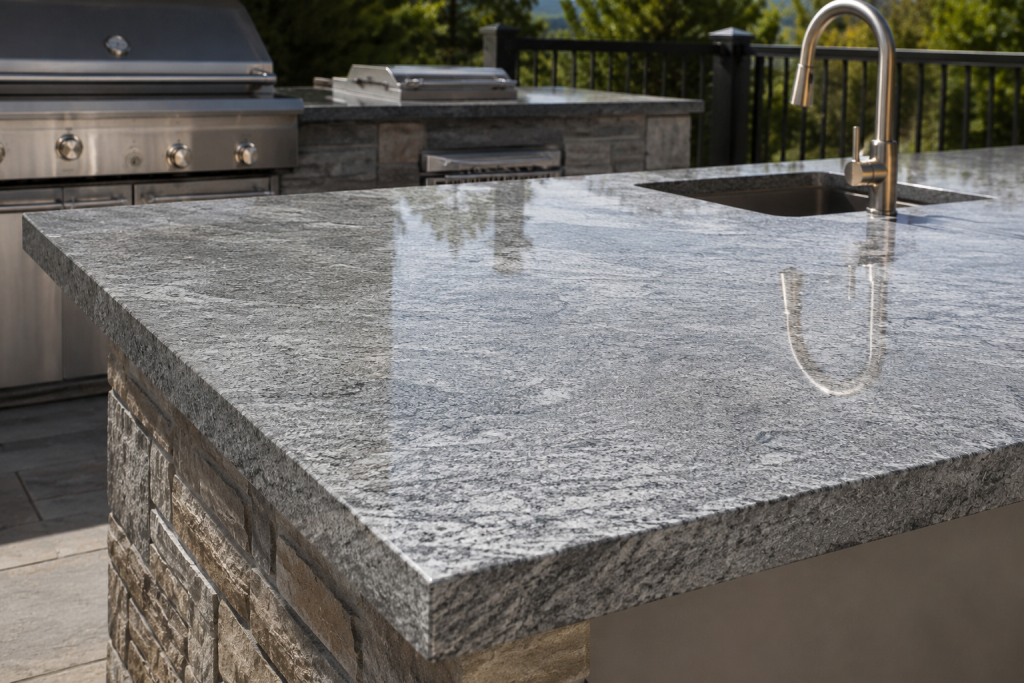
Granite generally has greater resistance to everyday scratching and acidic substances, but it can still chip or crack under certain conditions.
Understanding the material is essential. A repair technique suitable for one type of stone may not produce the same result on another.
Can Regular Cleaning and Sealing Prevent Expensive Stone Repairs?
Yes, appropriate maintenance can reduce certain types of damage, especially staining and moisture-related deterioration. However, cleaning and sealing cannot prevent every form of damage or correct existing structural problems.
Natural stone has different levels of porosity. Some materials absorb liquids more readily, making proper cleaning and sealing particularly important.
We recommend using cleaning products specifically formulated for natural stone. Acidic household cleaners, abrasive powders, and unsuitable chemicals can damage sensitive surfaces.
Professional penetrating sealers can reduce the rate at which liquids enter porous stone. They provide an additional protective layer within the material rather than creating an impermeable surface.
It is important to understand the limitations:
- Sealing does not prevent chips caused by impact.
- Sealing does not repair cracks or structural weaknesses.
- Sealing does not eliminate marble etching.
- Sealing does not replace damaged grout.
- Sealing does not make natural stone completely waterproof.
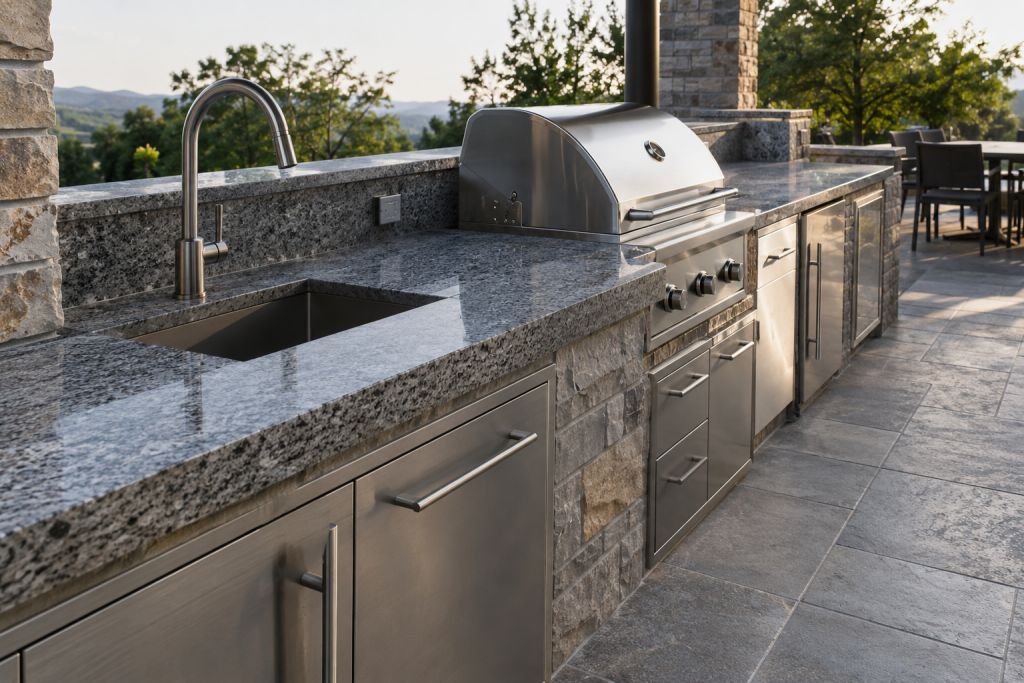
For homeowners whose countertops remain in good condition but need maintenance, we offer a dedicated cleaning and protection option.
What Is Included in Our PRESERVE Package?
Our PRESERVE Package starts at $450 and is designed for well-maintained countertops that need refreshing and additional protection. It is a budget-friendly maintenance option rather than a structural repair service.
The package includes:
PRESERVE Package – Starting At $450
Professional cleaning and protection:
- Professional deep cleaning.
- Premium penetrating sealer.
This service is particularly appropriate when the stone is generally in good condition but has accumulated everyday residue or needs renewed protection.
For example, a granite countertop may look dull because of cleaning-product buildup or accumulated surface residue rather than permanent damage. Professional deep cleaning can help remove suitable contaminants, while penetrating sealer provides additional protection against liquid absorption.
At The Art of Stone, we evaluate the surface before recommending this package. If we identify deep cracks, significant chips, etching, or structural problems, we explain why those conditions require a different restoration approach.
What Happens During a Professional Stone Repair?
Professional stone repair begins with an inspection, not immediately applying filler or polishing the surface. We need to understand the material, the extent of damage, and the conditions that caused it.
Our general assessment and repair process involves several stages.
1. Inspecting the damaged area
We examine the location, depth, and condition of the affected stone. We also check nearby seams, grout joints, and supporting surfaces when relevant.
2. Identifying the cause
We determine whether the damage resulted from impact, chemical exposure, moisture, movement, or inadequate support. This step helps prevent repeating the same repair problem.
3. Selecting compatible repair materials
Depending on the stone and damage, we may use specialized fillers, resins, or epoxy systems. Color and transparency are considered to help the repair blend with the surrounding material.
4. Reconstructing the damaged section
The repair material is applied and shaped to restore the affected area as closely as possible to its original profile.
5. Refinishing the surface
We adjust the repaired area to match the surrounding texture and finish. This may involve honing, polishing, or other appropriate finishing techniques.
6. Final inspection and maintenance recommendations
We evaluate the finished repair and explain the maintenance requirements that can help protect the restored surface.
Why Does Professional Experience Matter in Natural Stone Repair?
Natural stone repair requires an understanding of material behavior, fabrication techniques, surface finishing, and compatible restoration products. A repair that looks acceptable immediately after application may still be problematic if the wrong material or technique was used.
Our approach at The Art of Stone is supported by Ivan’s professional experience and technical work in the natural stone industry. He is an author of professional articles and materials, has developed proprietary technical methods, and has participated as a speaker at professional exhibitions, workshops, and educational events.
His professional background also includes educational activities at the College of Charleston and the American College of the Building Arts (ACBA). He is a member of professional associations, and his achievements and expertise in the natural stone industry have received official recognition at the U.S. federal level under the extraordinary ability standard.
This background informs how we approach complex restoration situations. We do not treat every crack, stain, or damaged edge as the same problem. We evaluate the material and conditions before selecting a repair method.
How Can Homeowners Recognize When Stone Needs Professional Attention?
The easiest way to identify a developing problem is to pay attention to changes in the surface rather than waiting until the damage becomes visually significant.
We recommend checking stone countertops and floors periodically for:
- New cracks or changes in existing cracks.
- Edges that begin chipping or breaking.
- Tiles that move or sound hollow.
- Grout joints that become loose or discolored.
- Areas that repeatedly absorb water or darken after contact with liquids.
- Changes in surface texture or finish.
A simple observation can help identify a problem early. However, homeowners should avoid applying random fillers, household adhesives, or aggressive cleaning products before the stone has been evaluated.
For stone repair in St. Stephen, SC, an early professional assessment can help determine whether the problem requires a small localized correction, more comprehensive restoration, or simply routine maintenance.
Frequently Asked Questions
Can small cracks in natural stone be repaired?
Yes. Some small cracks can be repaired using specialized resins or epoxy systems. The appropriate method depends on the stone type, crack depth, and underlying cause.
Is it cheaper to repair stone than replace it?
Often, yes, when the damage is localized and the surrounding material remains structurally sound. Extensive cracking or widespread deterioration may make replacement more practical.
Can a chipped granite countertop look new again?
Professional chip repairs can often blend closely with the surrounding granite. The final appearance depends on the stone’s pattern, color, chip location, and repair technique.
Does sealing prevent natural stone from cracking?
No. Penetrating sealers help reduce liquid absorption in porous stone, but they do not prevent structural cracks or impact damage.
How often should natural stone be professionally maintained?
It depends on the stone type, finish, usage, and exposure to liquids. Regular inspection and appropriate cleaning help determine when professional maintenance is needed.
Can old stone repairs be corrected?
In many cases, yes. However, existing fillers, incompatible adhesives, and previous surface treatments may affect the available repair options.
When should natural stone be replaced instead of repaired?
Replacement may be appropriate when damage is extensive, the stone has lost structural integrity, or the underlying installation cannot be reliably corrected.
Professional Stone Repair in St. Stephen, SC and Surrounding Areas
At The Art of Stone, we provide professional natural stone repair, restoration, honing, polishing, cleaning, and sealing services in Charleston, SC, St. Stephen, SC, and surrounding communities. We work with different types of natural stone and evaluate each project individually to determine the most appropriate restoration approach. If you notice cracks, chips, stains, or other signs of deterioration, contact us at 843-609-3536 to discuss your stone and available repair options.