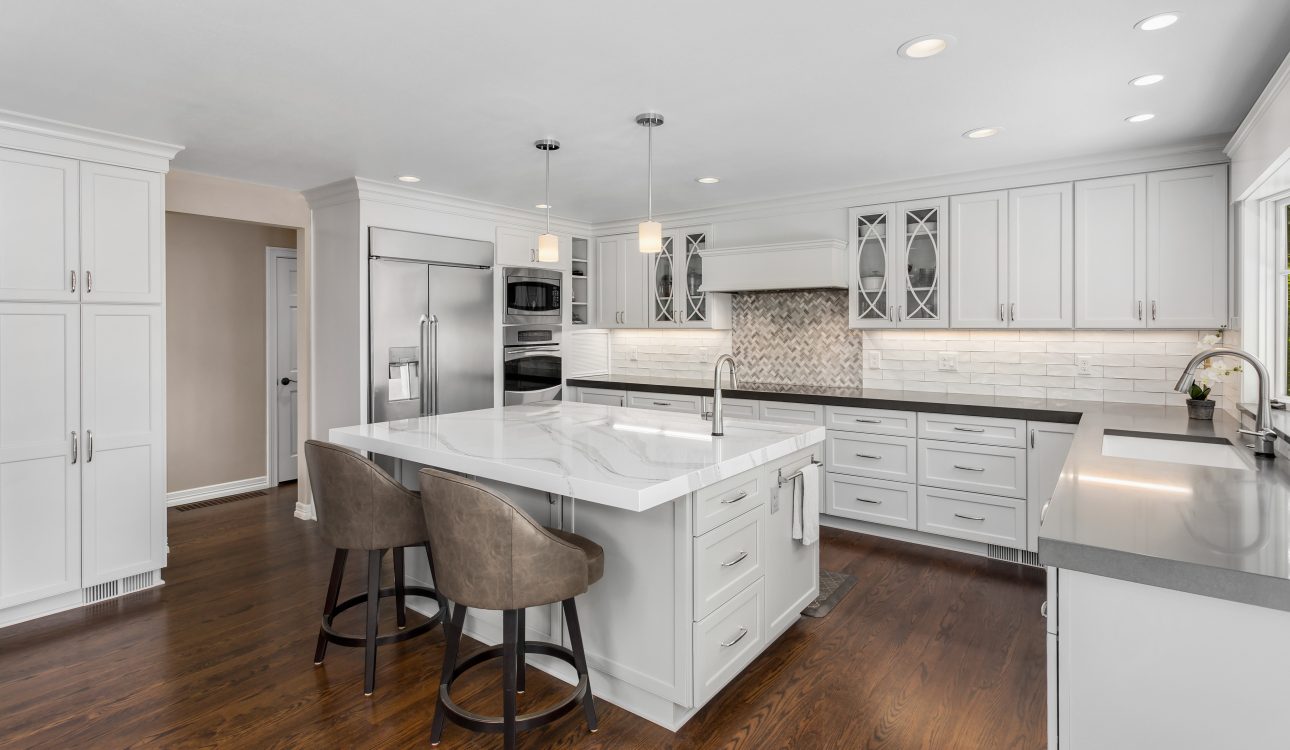
Yes, a sink cutout can sometimes be enlarged after a countertop has already been installed. The job is feasible only when the remaining stone, cabinet opening, sink dimensions, nearby seams, faucet holes, and existing condition of the countertop allow the material to be cut without creating an unreasonable risk of cracking.
For homeowners considering sink cutout modification in Charleston, SC, we evaluate the entire sink area rather than measuring only the existing opening. At The Art of Stone, we look at how much stone will remain around the new sink, whether the countertop has existing cracks or natural fissures, and whether the cabinet can physically accept the new bowl.

Why Would an Existing Sink Cutout Need to Be Enlarged?
A cutout usually needs modification when a homeowner wants a larger replacement sink or a different sink model. Even sinks sold under the same nominal width can have different bowl dimensions, rim profiles, corner radii, and mounting requirements.
The new sink should be selected before the stone is cut. We need the exact manufacturer template or verified dimensions because cutting from a general sink size can leave the opening too large, too small, or incorrectly shaped.
Can Granite, Marble, and Quartz All Be Modified?
Yes, all three can sometimes be modified, but they do not behave identically during on-site cutting. Granite and quartz are hard and rigid, while marble is generally softer and can be more vulnerable around narrow rails and cutout corners.
| Material | On-Site Modification | Common Concern | Heat Resistance | Routine Maintenance |
|---|---|---|---|---|
| Granite | Often possible when layout allows | Fissures, chips, narrow rails | High | Sealing may be needed depending on stone |
| Marble | Possible with careful evaluation | Cracking, chipping, softer edges | High | Stone-safe cleaning and sealing when appropriate |
| Quartz | Sometimes possible | Resin-containing material, heat and cutting stress | Moderate | No routine sealing |
For sink cutout modification in Charleston, SC, material identification is only the first step. The slab condition and layout around the sink are just as important.
How Much Stone Needs to Remain Around the Sink?
Enough stone must remain to keep the countertop stable, but there is no universal safe rail width for every material and layout. The answer depends on stone type, thickness, cutout geometry, support, nearby seams, and sink position.
The front rail is especially important because it is often one of the narrowest sections of stone in the countertop. Removing too much material can leave a fragile strip between the sink opening and the finished edge.
At The Art of Stone, we would rather recommend a different sink than remove material that leaves the countertop unnecessarily vulnerable.
Why Are Cutout Corners Important?
Corners concentrate stress, which is why their shape matters. Sharp internal corners can be more vulnerable than properly radiused transitions, especially when the countertop is already installed.
Existing chips, hairline cracks, repaired areas, or natural fissures near a proposed cut also matter. A small defect can become more significant when vibration and cutting stress are introduced nearby.
Can a Countertop Crack While the Sink Cutout Is Enlarged?
Yes. Any modification to installed stone carries some risk of cracking or chipping, even when specialized tools and careful technique are used.
Risk can increase with inadequate support, a narrow front rail, a nearby seam, pre-existing damage, or a difficult cutout shape.
For sink cutout modification in Charleston, SC, we discuss this risk before work begins rather than presenting on-site cutting as a guaranteed, zero-risk procedure.
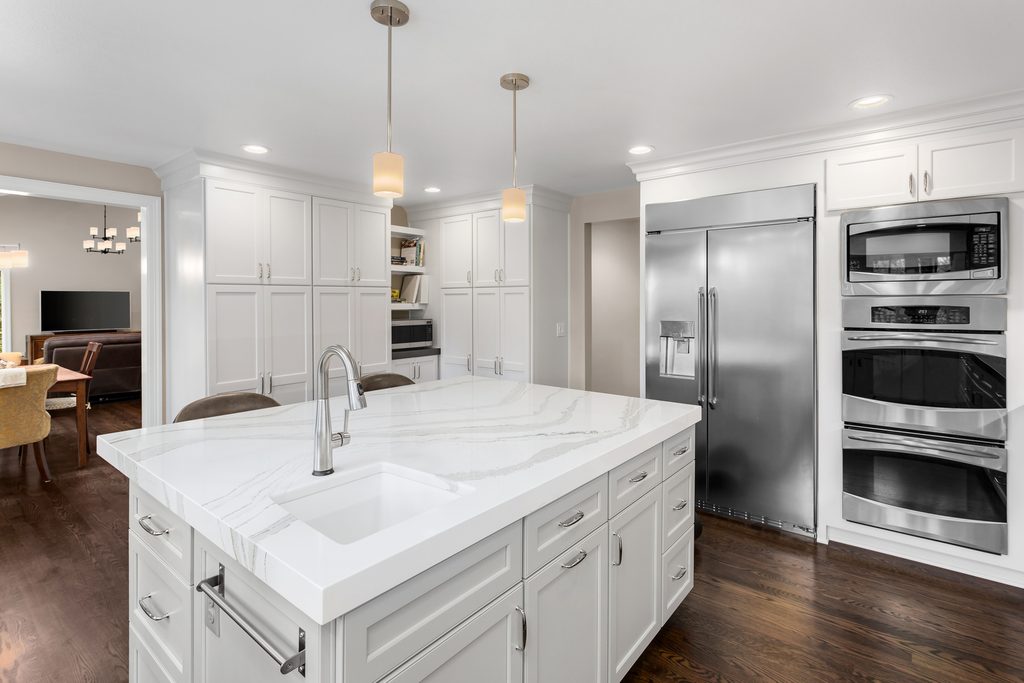
Does the New Sink Need to Fit the Cabinet Too?
Yes. A new sink can fit the countertop opening and still be too large for the cabinet underneath.
We check bowl width, depth, mounting hardware, disposal clearance, plumbing, cabinet side panels, and internal supports. A deeper sink can also change the drain position and reduce space for a garbage disposal or storage.
This is why enlarging the stone should never be planned independently from the sink base cabinet.
Can Existing Faucet Holes Limit the Modification?
Yes. Faucet, soap dispenser, filtered-water, and accessory holes can limit how far the cutout can move or grow.
If the new sink extends too close to an existing hole, there may not be enough stone between the openings. Old holes also remain visible unless the new layout incorporates them or a repair solution is practical.
Can a Drop-In Sink Be Converted to an Undermount Sink?
Sometimes, but this is more complex than simply enlarging the opening. A drop-in sink often hides the cut edge, while an undermount sink exposes it.
The stone may need reshaping and edge refinishing so the opening looks intentional. The cabinet also needs proper sink support below.
Can a Cutout Be Made Smaller?
Not in the same straightforward way it can be enlarged. Once stone has been removed, it cannot simply be added back invisibly.
If the new sink requires a substantially smaller opening, changing the sink choice or replacing the countertop may be more practical.
Does the Countertop Have to Be Removed Before Cutting?
Not always. Many sink opening modifications can be performed with the countertop in place when there is safe access, adequate support, and a suitable layout.
On-site cutting creates dust, vibration, and debris, so containment and protection are important. Removing the countertop can also introduce risk around seams, sinks, backsplashes, and adhesive points.
At The Art of Stone, we compare both sets of risks before choosing the approach.
What Should Be Checked Before Modification Begins?
The sink area should be evaluated as a complete assembly. We typically consider:
- Exact sink model and manufacturer template
- Existing cutout size and shape
- Countertop material and thickness
- Width of front, rear, and side rails
- Nearby seams and edge details
- Existing cracks, chips, repairs, or fissures
- Faucet and accessory hole locations
- Sink-base cabinet dimensions
- Disposal and plumbing clearance
- Countertop support around the opening
For sink cutout modification in Charleston, SC, these checks help determine whether the project is reasonable before any stone is removed.
How Is an Existing Stone Cutout Enlarged?
The process usually involves marking the revised opening from verified dimensions, protecting surrounding finishes, supporting vulnerable areas, and removing stone in controlled stages.
A typical process may include:
- Inspect the stone and cabinet.
- Verify the new sink template.
- Mark the revised cutout.
- Protect cabinets and surrounding surfaces.
- Cut and shape the stone in controlled sections.
- Refine exposed edges when required.
- Test-fit the sink.
- Confirm support and plumbing clearance.
The goal is not merely to make the new sink fit. The modified opening should also leave a structurally reasonable amount of stone around it.
Is Cutout Modification Better Than Replacing the Countertop?
It can be when the existing countertop is in good condition and only a manageable amount of material needs to be removed. It is less attractive when the stone is already cracked, the new sink is dramatically larger, or the modification would leave narrow unsupported areas.
A successful modification preserves a countertop that still has useful service life. A risky modification can turn a working countertop into a larger repair project.
Is the Preserve Package Used for Sink Cutout Modification?
No. Our Preserve Package is a separate budget-friendly restoration option starting at $1,100 for qualifying stone and tile restoration projects. It is not the price of sink cutout work.
The package includes:
- Professional deep cleaning of walls and floor
- Premium European penetrating sealer
- Cosmetic grout touch-ups, up to 10 linear feet
Cosmetic grout touch-ups improve appearance only and do not replace full regrouting when grout has failed over a larger area. Sink modification requires its own evaluation because material, access, cutting complexity, and risk vary by countertop.
Why Does Technical Stone Experience Matter?
Technical experience matters because an installed countertop cannot be treated like an ordinary piece of material that can simply be recut without consequence. The technician needs to understand stress points, natural fissures, edge conditions, previous repairs, support, and how different stones respond to cutting.
Ivan has authored professional materials and articles, developed technical methods, participated as a speaker at professional exhibitions, workshops, and educational events, and has been involved with professional associations. His educational activity has included the College of Charleston and the American College of the Building Arts (ACBA).
His natural stone expertise has also received federal-level recognition in the United States under the extraordinary-ability standard. That background informs how The Art of Stone evaluates technically sensitive stone work instead of treating every cutout as the same job.

FAQ
Can any stone sink cutout be enlarged?
No. The countertop must have enough sound material around the proposed opening, and the new sink must fit the cabinet below.
Can granite crack during sink cutout modification?
Yes. Cutting installed granite carries a risk of chipping or cracking, especially near fissures, seams, narrow rails, or unsupported areas.
Can quartz sink cutouts be enlarged?
Sometimes. The layout, remaining material, support, and specific quartz product all need to be evaluated first.
Can marble sink cutouts be modified?
Yes, in some cases, but marble requires careful handling because narrow sections and existing damage can increase risk.
Can a larger sink fit the countertop but not the cabinet?
Yes. Bowl depth and width, disposal clearance, plumbing, and cabinet construction all need to be checked.
Can a sink opening be made smaller?
Large reductions are difficult because removed stone cannot simply be restored seamlessly. A different sink or countertop replacement may be more practical.
Does the countertop always need to be removed for modification?
No. Some modifications can be completed in place when access, support, and layout allow it.
Sink Cutout Modification and Stone Repair in Charleston, SC
The Art of Stone serves Charleston, SC and nearby communities with stone and tile restoration, repair, maintenance, countertop and vanity work, floors, showers, outdoor stone, and technically sensitive stone repairs.
If you need sink cutout modification in Charleston, SC, we can evaluate the existing countertop, new sink dimensions, cabinet opening, support, nearby seams, faucet holes, and condition of the stone before determining whether enlargement is practical. For homeowners looking for sink cutout modification in Charleston, SC, that evaluation is what tells us whether modification or replacement is the safer path. Call 843-609-3536 to discuss the project.