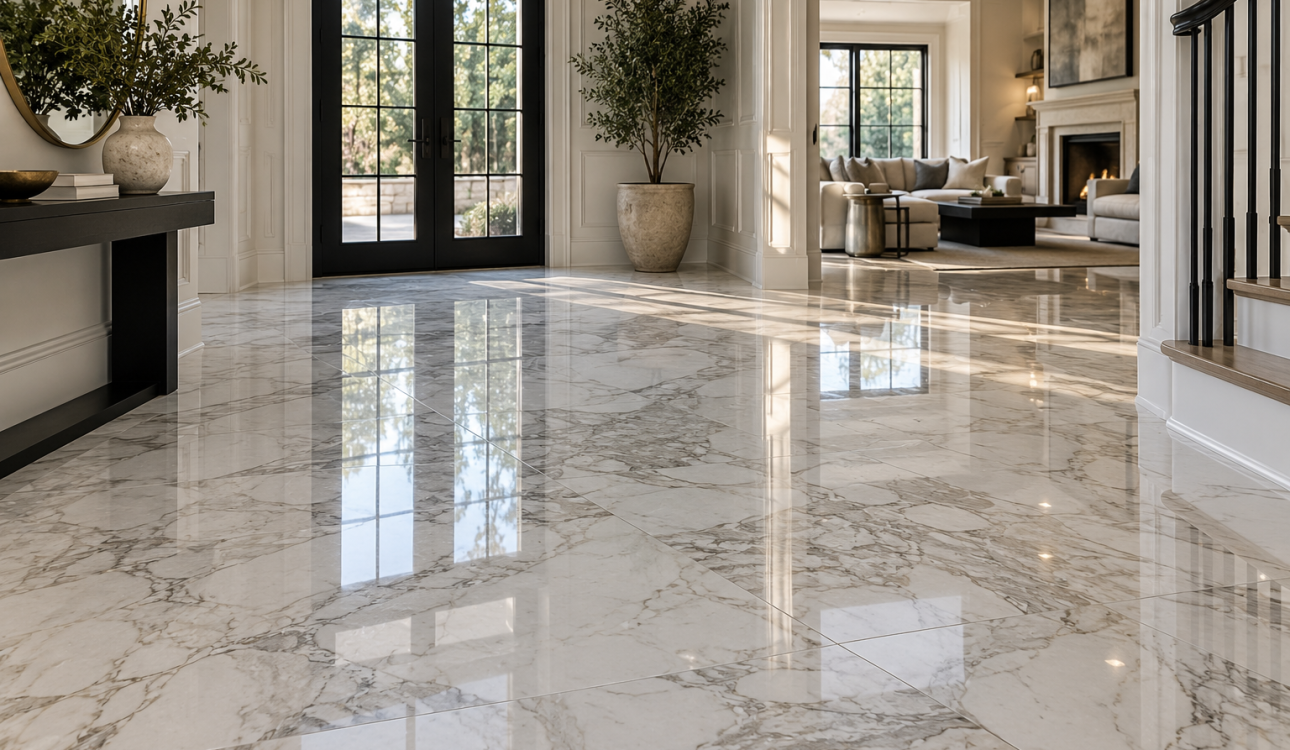
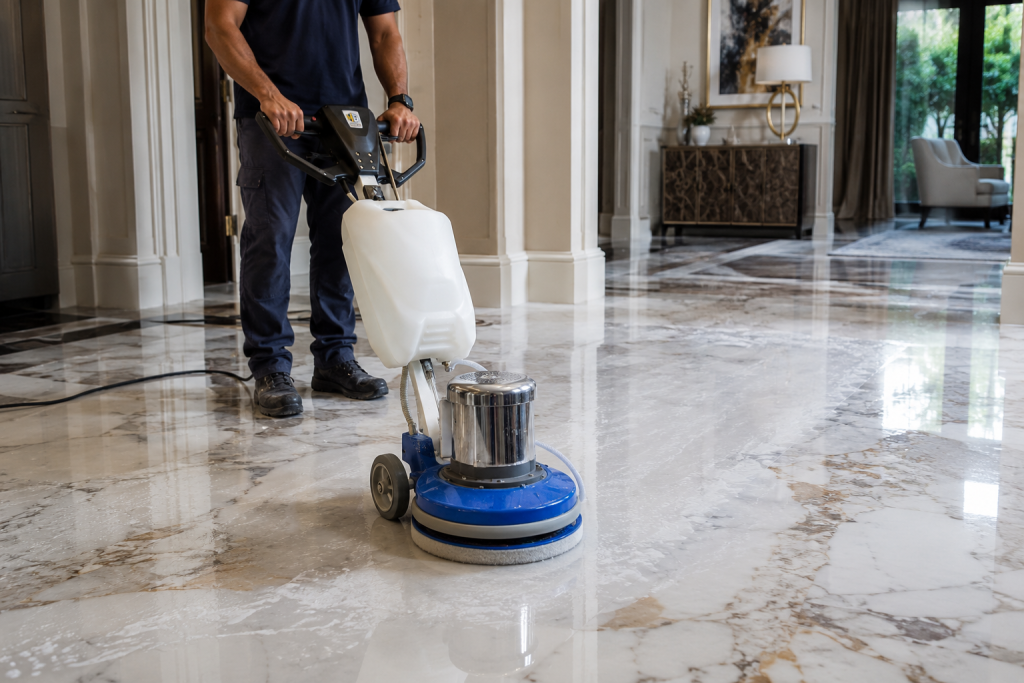
Yes, marble floor restoration can be worth doing before selling a home when the floor is structurally sound but looks dull, scratched, etched, stained, or uneven in sheen. Restoring the existing stone can improve how the space presents in listing photos and during showings without the disruption of replacing a valuable natural-stone floor.
For homeowners considering marble floor restoration in Charleston, SC, the important question is not whether every marble floor should be polished before a sale. At The Art of Stone, we first determine whether the problem is normal surface wear, etching, scratches, stains, lippage, failed grout, or actual structural damage.
Can Worn Marble Make a Home Look Less Maintained?
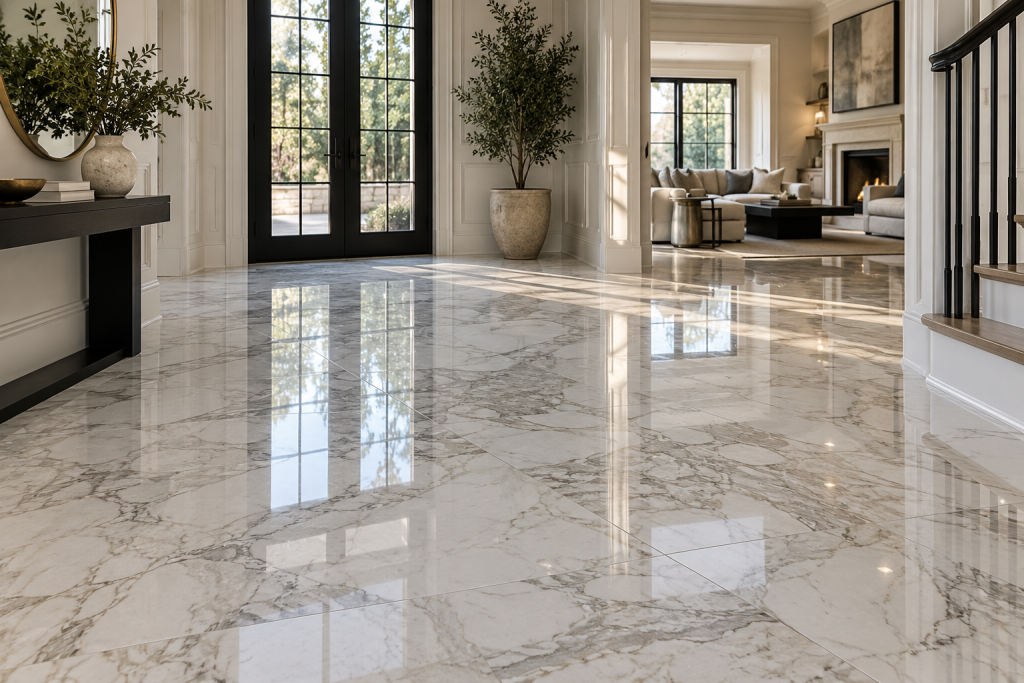
Yes. A marble floor with cloudy traffic lanes, visible etching, dark stains, or inconsistent shine can make an otherwise well-kept room look neglected.
Buyers may not know the technical difference between etching and staining, but they can see when the finish looks patchy. Large foyers, kitchens, bathrooms, and open living areas are especially noticeable because the floor occupies so much of the visual field.
Restoration does not guarantee a higher sale price. What it can do is remove obvious surface defects that may distract from the rest of the home.
Which Marble Floor Problems Are Most Noticeable Before a Sale?
Uneven sheen, scratches, etching, dirty grout, and obvious stains usually stand out first. Strong natural or artificial light can make these problems even easier to see.
Before marble floor restoration in Charleston, SC, we commonly evaluate:
- Dull walking paths
- Acid etching and cloudy spots
- Fine and deeper scratches
- Isolated stains
- Uneven previous polishing
- Dirty or missing grout
- Small chips at tile edges
- Lippage between adjacent tiles
- Old wax, coating, or cleaning residue
These conditions do not all require the same treatment.
Is Polishing Enough for a Dull Marble Floor?
Sometimes, but not always. Polishing works best when the surface is already properly prepared and the remaining problem is mainly loss of sheen.
If the floor has deeper scratches, widespread etching, uneven wear, or previous polishing damage, honing is often needed first. Honing mechanically refines the stone and removes a controlled amount of damaged surface before the final finish is rebuilt.
At The Art of Stone, we do not try to solve every dull floor by adding more polish.
What Is the Difference Between Honing and Polishing?
Honing corrects surface damage and refines the stone to a more uniform condition, while polishing increases the sheen of an already prepared surface. They are related steps, but they are not interchangeable.
| Condition | Honing | Polishing |
|---|---|---|
| Deep or widespread etching | Often needed | Usually not enough alone |
| Fine surface wear | May be needed | Often follows |
| Uneven sheen | Often helps normalize surface | Restores final sheen |
| Deeper scratches | Usually required | Cannot reliably remove them alone |
| Already even surface with reduced shine | May not be necessary | Often appropriate |
For marble floor restoration in Charleston, SC, choosing the correct starting step is more important than simply making the floor look glossy.
Can Restoration Remove Etching?
Yes, many etched areas can be improved or removed through controlled honing and refinishing. Etching is chemical surface damage caused when acidic substances react with calcite in marble.
It is different from staining. A stain penetrates the stone and changes its color, while an etch changes the surface texture and reflectivity.
Sealing does not prevent etching, so applying sealer over a cloudy acid mark does not repair it.
Can Old Stains Be Removed Before Selling?
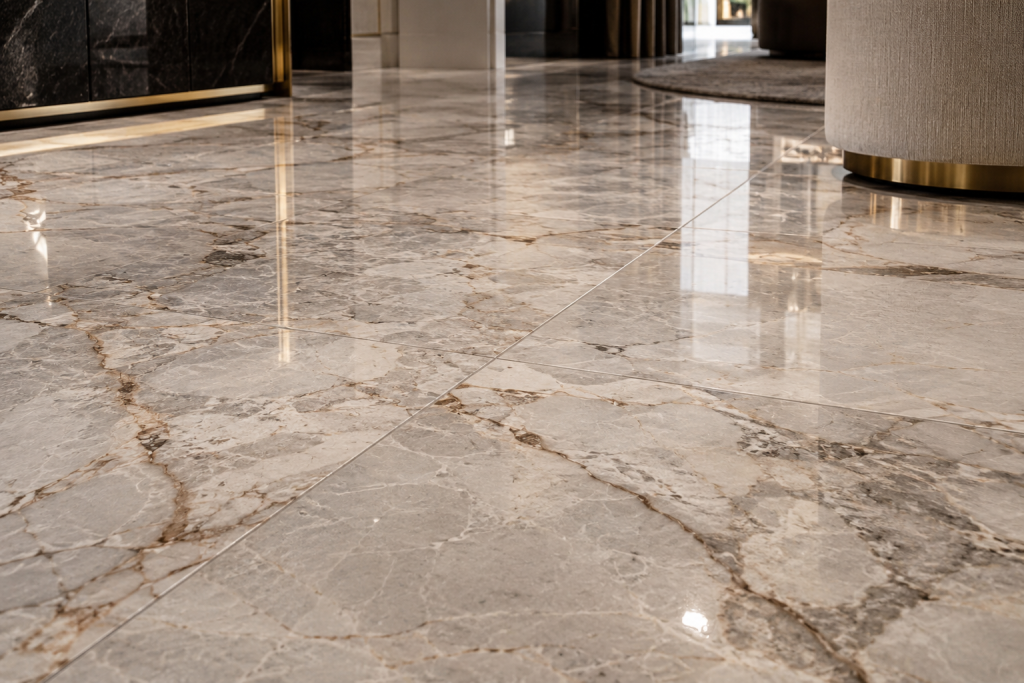
Some stains can be significantly reduced or removed, but stain treatment depends on what entered the stone and how deeply it penetrated. Oil, rust, organic material, and other contaminants may require different methods.
We prefer to treat stains before final honing, polishing, and sealing when appropriate. Polishing over a stain may improve surrounding shine while leaving the discoloration clearly visible.
Why Does Marble Look Worse in Listing Photos?
Light reflects unevenly from worn marble, which can exaggerate cloudy zones, scratches, and polishing differences in photographs. Wide windows and overhead lighting often reveal imperfections that are less obvious in softer everyday light.
A floor that looks acceptable from one angle may appear patchy from another. This is why we assess the surface across the room rather than spot-polishing only the most obvious areas.
Can Spot Polishing Be Enough Before Listing a Home?
Sometimes for a very small isolated issue, but spot polishing can create a visible halo when the repaired area has a different sheen from the surrounding floor.
On a larger continuous marble floor, a broader restoration area often produces a more consistent result. We would rather correct the finish transition than create one bright patch in the middle of an older floor.
Should Grout Be Addressed During Marble Floor Restoration?
Yes, when grout condition affects the appearance of the floor. Clean polished marble next to dark, cracked, or missing grout can still look unfinished.
Cosmetic grout touch-ups can improve limited areas, but they are not the same as full regrouting. Widespread loose or deteriorated grout requires a different scope.
At The Art of Stone, we separate cosmetic improvement from repairs that are actually needed for the floor.
What About Lippage Between Marble Tiles?
Minor lippage can sometimes be corrected through professional flattening or grinding, but not every uneven tile should automatically be ground. We first determine whether the height difference is part of the original installation, movement, or another substrate issue.
Grinding changes the stone surface and requires a complete refinement sequence afterward. If tiles are loose or the substrate is unstable, surface restoration alone is not the right repair.
Should Marble Floors Be Sealed After Restoration?
Sometimes. If the marble is absorbent, an appropriate penetrating sealer can slow the absorption of liquids and provide more time to clean spills.
Sealer does not make marble waterproof, scratch-proof, or etch-proof. It also does not restore shine.
For marble floor restoration in Charleston, SC, sealing is considered after the stone has been cleaned, restored, and allowed to dry appropriately.
Is Restoration Better Than Replacing Marble Before a Sale?
Often, yes, when the existing marble is sound and the main problems are surface-related. Replacement requires demolition, disposal, new material, installation, and additional finishing work around adjacent surfaces.
Existing marble may also be difficult to match if only one area is replaced. Restoration preserves the original material and can be far less disruptive.
Replacement may be the better choice when tiles are extensively fractured, loose because of substrate failure, badly deteriorated, or no longer suitable for the space.
How Close to Listing Should Marble Restoration Be Done?
Ideally, restoration should be completed before final listing photography and before heavy staging traffic. For homeowners scheduling marble floor restoration in Charleston, SC, this timing also leaves room for drying, curing, and a final inspection before showings begin.
After restoration, we recommend protecting the surface while furniture is moved and staging is completed. Dragging heavy furniture or allowing construction dust and grit back onto the floor can quickly create new scratches.
What Is the PRESERVE Package?
The PRESERVE Package is a separate budget-friendly restoration option starting at $1,100 for qualifying stone and tile projects. It should not be interpreted as the standard price for full marble floor honing and polishing.
The package includes:
- Professional deep cleaning of walls and floor
- Premium European penetrating sealer
- Cosmetic grout touch-ups, up to 10 linear feet
Cosmetic grout touch-ups improve appearance only and do not replace full regrouting when the grout has widespread deterioration.
Why Does Technical Experience Matter With Marble Floors?
Technical experience matters because a floor can look dull for several completely different reasons. Wax buildup, etching, scratches, worn polish, lippage, stains, and previous restoration mistakes require different solutions.
Ivan has authored professional materials and articles, developed technical methods, and participated as a speaker in professional exhibitions, workshops, and educational events. His educational activity has included the College of Charleston and the American College of the Building Arts (ACBA), and he has participated in professional associations.
His natural stone expertise has also received federal-level recognition in the United States under the extraordinary-ability standard. That background informs the diagnostic approach we use at The Art of Stone.
FAQ
Can marble floors be restored instead of replaced?
Yes. If the tiles and substrate are sound, many scratches, etched areas, dullness, and finish inconsistencies can be restored.
Does polishing remove deep scratches?
Not usually. Deeper scratches generally require honing before polishing.
Does sealing stop marble from etching?
No. Sealer can reduce liquid absorption but does not prevent acidic substances from chemically etching marble.
Can stains be removed during restoration?
Sometimes. The treatment depends on the stain source and depth, and stain removal is separate from polishing.
Should grout be repaired before listing a home?
Damaged or missing grout should be evaluated. Small cosmetic areas may be touched up, while widespread failure may require regrouting.
Can marble restoration guarantee a higher home sale price?
No. Restoration can improve presentation and condition, but it cannot guarantee a specific increase in sale price.
How long should we protect the floor after restoration?
That depends on the treatments used. We follow the specific cure and drying requirements for any sealer or repair material applied.
Marble Floor Restoration in Charleston, SC
The Art of Stone serves Charleston, SC and nearby communities with professional restoration, repair, and maintenance for marble floors, natural-stone countertops and vanities, showers, tile, outdoor stone, and pool areas. Our work can include cleaning, honing, polishing, stain treatment, repairs, grout-related work, and sealing when appropriate.
If you are preparing a home for sale and considering marble floor restoration in Charleston, SC, we can evaluate which defects are cosmetic, which require mechanical restoration, and whether the existing marble is a good candidate for preservation rather than replacement. Call 843-609-3536 to discuss the condition of the floor.